EU F-Gas Regulation 2027: A Compliance Roadmap for Heat Pump Importers
- Share
- publisher
- Suoher Heat Pump Team
- Issue Time
- Aug 29,2026
Summary
EU F-Gas Regulation 2024/573 bans R32 monobloc heat pumps up to 12kW from 1 January 2027. This compliance roadmap explains Annex IV ban dates, HFC quota cuts, R290 as the new residential default, commercial alternatives R454C and R744, and provides an importer compliance checklist for the 2027 transition.
The Regulatory Tipping Point
On 11 March 2024, Regulation (EU) 2024/573 — the revised F-Gas Regulation — entered into force, replacing the 2014 framework with a far more aggressive HFC phase-down schedule. For heat pump importers, distributors, and OEM brands operating in the European market, this is not a future concern. It is a present-tense supply chain problem with a hard 2027 deadline.
The European Commission's own impact assessment estimated that the revised regulation will cut HFC consumption by roughly 95 percent by 2030 compared to the baseline. The European Heat Pump Association (EHPA) has acknowledged the transition challenge while affirming that natural refrigerants like propane (R290) are technically ready for residential applications. The International Energy Agency (IEA) likewise identifies heat pump deployment as essential to meeting Europe's decarbonization targets — meaning the regulation cannot be allowed to slow the roll-out, but it will reshape which products can legally be sold.
For importers, the central question is no longer whether the transition happens, but which models in your current portfolio will become unsellable, and when.
Annex IV Ban Dates for Heat Pumps
The most consequential provisions for the heat pump industry sit in Annex IV of the regulation, which lists specific prohibitions on placing HFC-containing equipment on the EU market. The timeline below applies to new equipment placed on the market — not servicing of existing units, which follows a separate (and more gradual) phase-down.
2027: Monoblocks & Self-Contained ≤ 12 kW Below 150 GWP
From 1 January 2027, the regulation prohibits placing on the market domestic monoblock heat pumps and self-contained heat pumps with a rated capacity up to 12 kW that contain HFCs with a GWP of 150 or higher. This single clause effectively ends the commercial viability of R32 (GWP 675) in the most common residential monoblock category — units between 5 and 12 kW that represent the backbone of European air-to-water heat pump sales.
If your current product list relies on R32 monoblocks in this size range, every unit shipped to the EU after that date must either use a refrigerant with GWP below 150 or fall outside the scope of the prohibition (e.g., split systems, which face a later deadline but require certified installation).
2029: Hermetic Systems
From 1 January 2029, the prohibition extends to additional product categories, including certain hermetically sealed commercial systems. For heat pump water heaters and larger self-contained units that previously enjoyed a reprieve, this is the next cliff edge. Importers who delayed the 2027 transition by shifting to split configurations will find that window closing as well.
2032 / 2035: Remaining Bans
From 1 January 2032 and 1 January 2035, further prohibitions sweep in the remaining HFC-using categories, with limited exemptions for servicing existing equipment. By the mid-2030s, the expectation is that virtually no new HFC-containing heat pump can be placed on the EU market.
HFC Quota Cuts: The Other Squeeze
Beyond outright bans, the regulation tightens the HFC quota — the total quantity of HFCs (measured in CO2-equivalent tonnes) that can be placed on the EU market each year. The revised Annex I schedule reduces the quota from approximately 25 percent of the historical baseline in 2025 to under 3 percent by 2030, reaching zero by 2031.
Even before the 2027 ban takes effect, the shrinking quota will make R32 refrigerant itself scarcer and more expensive. Importers who assume they can keep selling R32 units until the last day of 2026 should model the cost trajectory: as the quota shrinks, allocation holders will prioritize high-value applications, and heat pump refrigerant pricing will reflect scarcity.
| Year | HFC Quota (% of Baseline) | Approx. Reduction from Baseline |
|---|---|---|
| 2025 | 24.67% | ~75% |
| 2026 | 20.24% | ~80% |
| 2027 | 15.81% | ~84% |
| 2028 | 11.37% | ~89% |
| 2029 | 6.94% | ~93% |
| 2030 | 2.51% | ~97.5% |
Source: Annex I of Regulation (EU) 2024/573. Percentages represent the maximum quantity of HFCs that may be placed on the EU market relative to the 2009–2012 consumption baseline. Actual figures should be verified against the official regulation text.
What This Means for R32 Inventory
R32 (difluoromethane, GWP 675) has been the workhorse refrigerant for residential air-to-water heat pumps since the mid-2010s, prized for its reasonable efficiency, moderate operating pressures, and lower charge sizes compared to R410A. But under the new regulation, R32's GWP of 675 is nearly five times the 150 threshold.
2026: The Last Full Sales Year
For the domestic monoblock ≤ 12 kW category, 2026 is the last full calendar year in which R32 units can be placed on the EU market without restriction. Importers and OEM brands that have not already begun certifying R290 alternatives are now on the critical path. A typical CE + ErP + internal lab testing cycle for a new refrigerant variant runs 4 to 6 months — and certification bodies across Europe are already reporting increased demand.
The practical implication: if you want R290-compliant models on your price list before Q4 2026, the engineering and certification work needs to start now, not next quarter.
Regional Stockpiling Trends
Some distributors are building R32 inventory to sell through in early 2027 before the ban window closes. This is a legitimate short-term strategy, but it carries two risks: first, the HFC quota squeeze may inflate R32 refrigerant and component costs in 2026; second, any unsold R32 stock after the ban date cannot be placed on the market, creating potential write-offs. The regulation does not grandfather existing distributor stock — the prohibition applies to placement on the market, regardless of when the unit was manufactured.
R290: The New Default for Residential
Propane (R290, GWP ~3) is the refrigerant that the European heat pump industry has converged on as the default replacement for R32 in residential monoblock applications. It offers excellent thermodynamic performance, low operating pressures, and a GWP that is not merely below 150 — it is essentially negligible.
Compliance by Design
From a regulatory standpoint, R290's GWP of 3 means any monoblock heat pump using it automatically satisfies the Annex IV GWP threshold. There is no need for complex exemption applications or quota allocation — the product is inherently compliant with the 2027 ban. This is why nearly every major European manufacturer has announced R290 monoblock roadmaps.
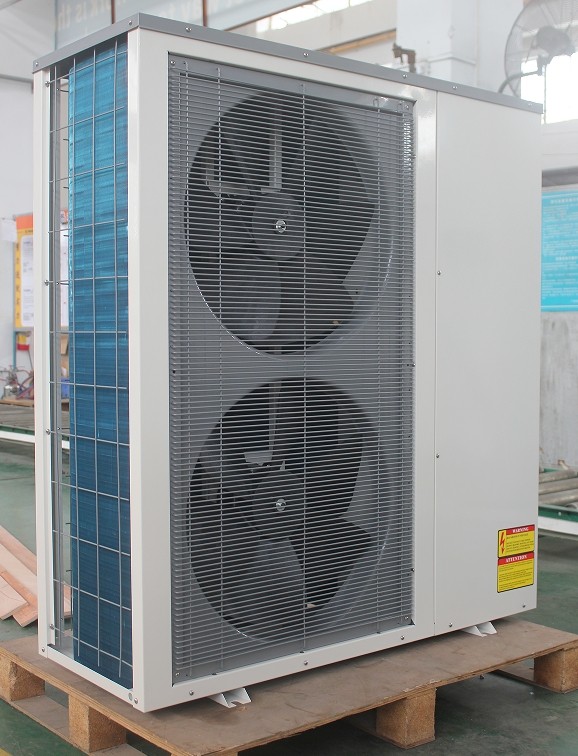
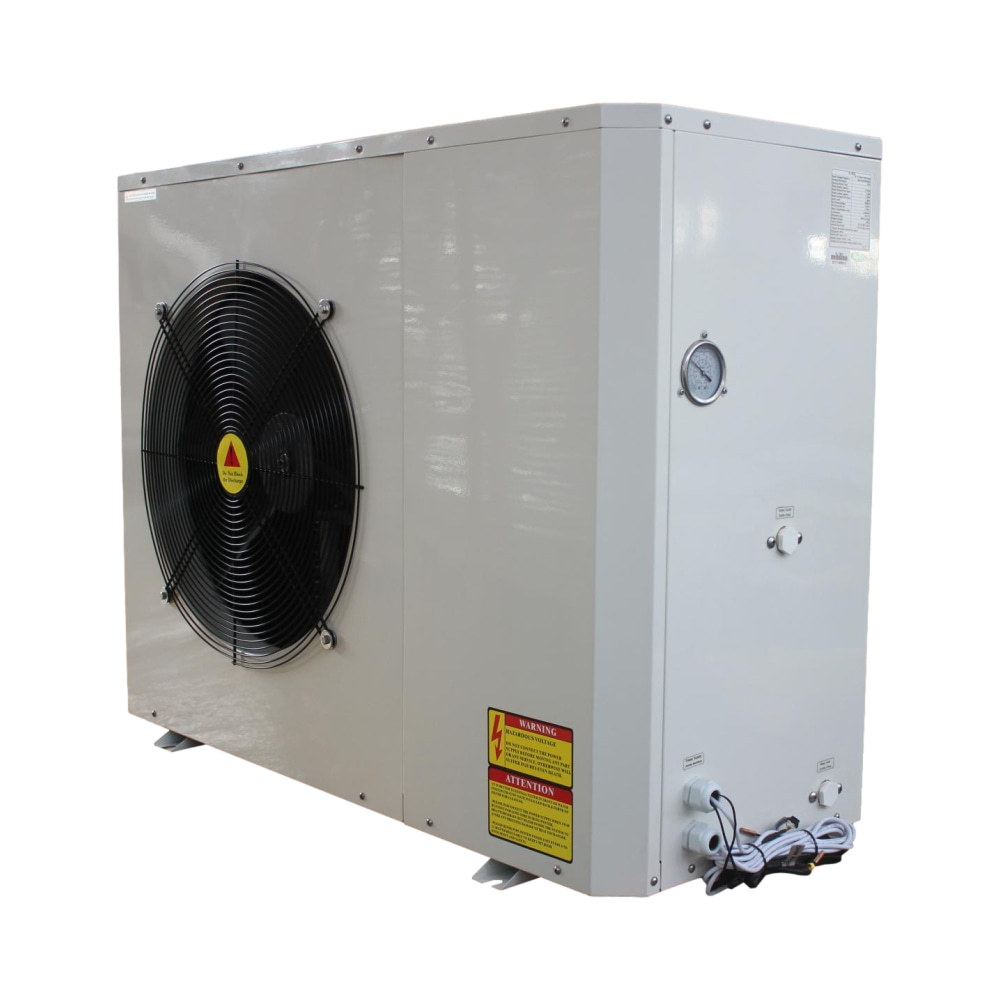
SHAW-12EVIM — 12 kW EVI Monobloc
Low-ambient EVI monobloc heat pump for heating, hot water, and cooling. 380V/3PH, 3250 m³/h airflow. Designed for cold-climate residential deployment where the 2027 F-Gas transition demands R290-ready platforms.
- Power Supply: 380V / 3PH / 50Hz
- Net Dimensions: 1110 × 460 × 850 mm
- Air Flow: 3250 m³/h
- Fan Rated Power: 90 W
Safety and Charge Limits
R290 is flammable (A3 classification), and this is the engineering challenge that makes the transition non-trivial. The IEC 60335-2-40 standard and EN 378 define charge size limits based on installation category, room volume, and mitigation measures (such as leak detection and ventilation). For monoblock outdoor units — which keep the refrigerant circuit entirely outside the building envelope — charge sizes of 150 g to 500 g are typically feasible within the safety framework, depending on unit capacity.
The key design principle: monoblock architecture inherently mitigates flammability risk because the refrigerant never enters the indoor space. This is precisely why the regulation targets monoblocks first — the safety case for R290 is strongest in that configuration.
For a deeper technical comparison of R32 and R290 properties, see our earlier article R32 vs R290 Refrigerants: What Heat Pump Buyers Must Know Before 2027.
Commercial Alternatives: R454C and R744
For applications outside the residential monoblock ≤ 12 kW scope — commercial buildings, industrial process heat, large swimming pool facilities — the refrigerant landscape is more nuanced. Two alternatives merit attention:
R454C (a blend of R32 and R1234yf) has a GWP of approximately 146 — just under the 150 threshold. It is non-flammable (A1, though technically classified as A2L in some jurisdictions), which simplifies installation in commercial settings where charge sizes are larger. However, its GWP hovering at the threshold means any future regulatory tightening could pull it back into scope. Importers using R454C should treat it as a transitional solution, not a permanent one.
R744 (CO2) has a GWP of 1 and is non-flammable, making it attractive for commercial and high-temperature applications. Transcritical CO2 systems are well-established in commercial refrigeration and increasingly used for heat pump water heating, particularly in markets like Japan and parts of Northern Europe. The trade-off is higher operating pressures (up to 130 bar), which require specialized components and increase system cost.
For commercial heat pumps above 12 kW that fall outside the 2027 ban, R454C provides a near-term path, while R744 offers the most future-proof GWP profile for projects with the budget and engineering capacity to accommodate it.
Importer Compliance Checklist
The following checklist distills the regulation into actionable steps for importers and distributors who need to maintain a sellable product portfolio across the transition period.
Verify Certificates per Model
For every model you plan to sell in the EU after 1 January 2027, confirm that the refrigerant's GWP is below 150 and that the unit carries valid CE marking, ErP energy labelling, and where applicable, the EHPA KEYMARK. If your supplier has not yet initiated R290 certification, request a timeline in writing. For an overview of the certification landscape, see Heat Pump Certifications Explained: CE, ErP, Keymark, MCS, AHRI and More.
Documentation Requirements
The F-Gas Regulation requires importers (defined as "undertakings that place HFCs or equipment containing HFCs on the Union market") to register with the competent authority in their Member State and report annually on the quantities placed on the market. Even if you are importing R290 units (which are exempt from quota), you must demonstrate that your products comply with the prohibition schedule. Keep on file: the Declaration of Conformity, refrigerant type and charge quantity per model, and the manufacturer's HFC quota authorization (if applicable).
Supply Chain Planning
Map your entire product line against the ban timeline:
- Category A — Residential monoblock ≤ 12 kW: Must transition to GWP < 150 refrigerant by 1 Jan 2027. If still on R32, flag as critical risk.
- Category B — Hermetic/self-contained commercial: Deadline 1 Jan 2029. Begin R290 or R454C qualification now.
- Category C — Split systems and larger capacities: Later deadlines, but quota pressure will affect pricing regardless. Plan for R290 or R32-with-quota strategy.
- Category D — R32 stock in distributor warehouses: Sell through before ban date. No grandfathering for pre-ban stock.
For each category, confirm with your manufacturer that the R290 variant is in the certification pipeline, and negotiate transition pricing that accounts for the component changes (compressor, expansion valve, safety sensors) that R290 systems require.
How Suoher Is Preparing R290 Lines
At the Suoher factory in Foshan, the R290 monoblock development programme has been running since 2024. The engineering work covers four parallel tracks: compressor qualification (R290-compatible scroll and rotary compressors from GMCC and other approved suppliers), refrigerant circuit redesign for lower charge sizes, safety system integration (leak detection sensors, ventilation interlocks per IEC 60335-2-40), and production line adaptation for flammable refrigerant charging.
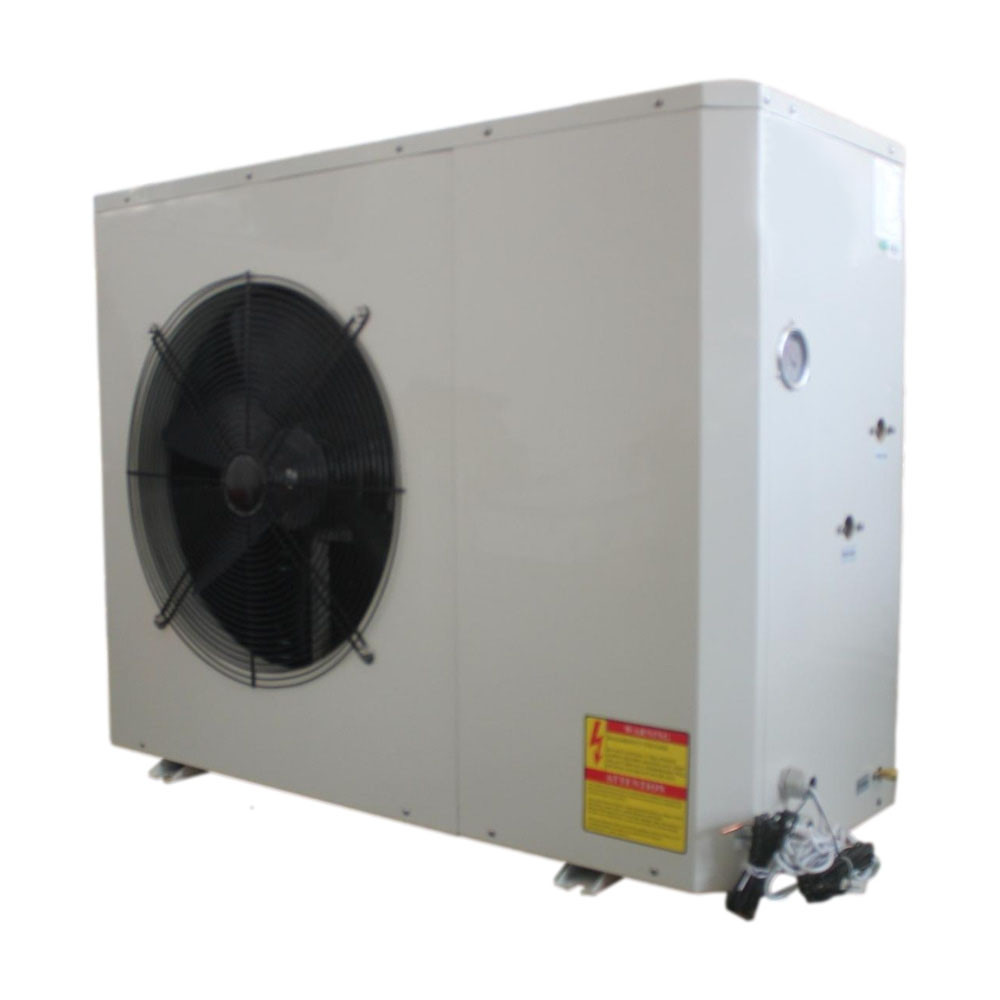
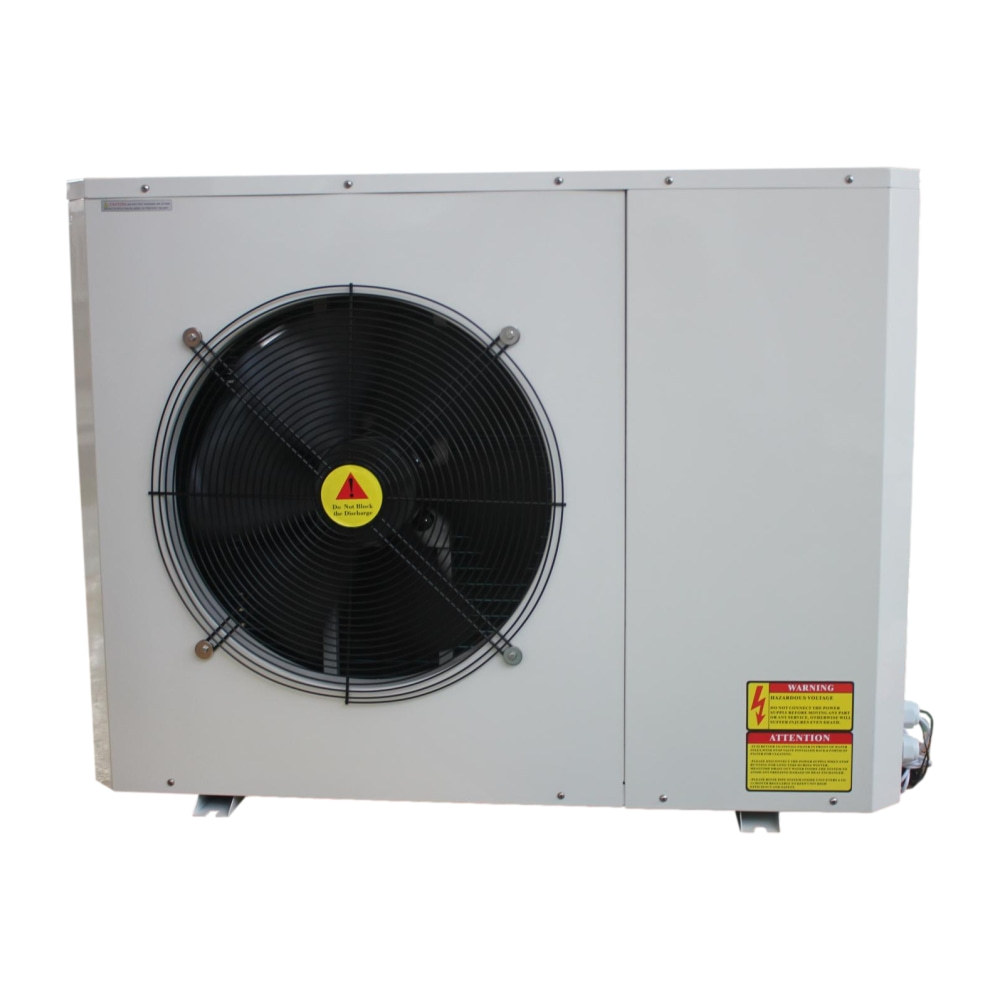
SHAW-11EVIM — 11 kW EVI Monobloc (220V)
Single-phase 11 kW EVI monobloc for residential heating, hot water, and cooling. 220V/1PH makes it ideal for markets with single-phase residential supply. Available in the R290 platform development pipeline.
- Power Supply: 220V / 1PH / 50Hz
- Net Dimensions: 1110 × 460 × 850 mm
- Air Flow: 3250 m³/h
- Fan Rated Power: 90 W
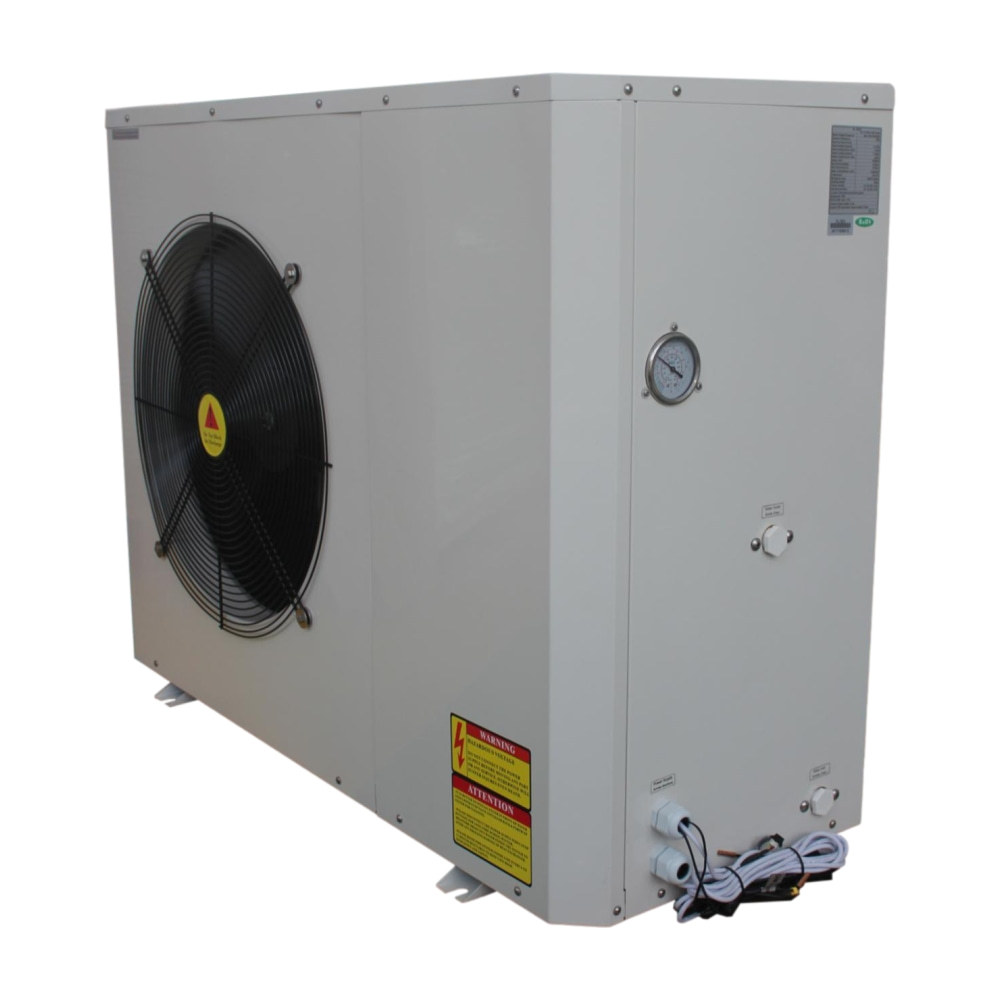
The Suoher R290 engineering team is targeting Q1 2027 for first-article R290 monobloc certification submissions, with production-ready units available for OEM branding and distributor ordering before the ban deadline. The 12 kW and 11 kW EVI monobloc platforms shown above are the base architectures being adapted — the same chassis, airflow, and evaporator design, re-engineered for propane refrigerant and enhanced safety systems.
This is not a retrofit. The R290 programme involves new tooling for the refrigerant charging station (which must meet ATEX-zone requirements for flammable gas handling), updated quality control protocols, and staff training on safe refrigerant handling procedures. The investment is significant, but the alternative — being unable to ship to Europe after 2027 — is more expensive.
Secure Your 2027 Compliance Window: Request Suoher's F-Gas Transition Kit
The F-Gas Regulation transition is not a problem you can defer to 2026. Between certification lead times, quota-driven refrigerant cost increases, and the need to update distributor price lists and marketing materials, the window for a smooth transition is now.
Suoher is offering importers and OEM partners a F-Gas Transition Kit that includes: the current R32 product portfolio with stated sell-through deadlines, the R290 development roadmap with projected certification dates, technical specifications for the SHAW-12EVIM and SHAW-11EVIM monobloc platforms, and a compliance checklist tailored to your target EU Member States.
Contact our export team today to receive the kit and schedule a technical consultation. The 2027 deadline is fixed in regulation — your preparation timeline is not.
This article is provided for informational purposes and reflects our understanding of Regulation (EU) 2024/573 as of the date of publication. Regulatory text and implementation guidance may be updated. Importers should always consult the official regulation text and their national competent authority for definitive compliance requirements.