R32 vs R290 Refrigerants: What Heat Pump Buyers Must Know Before 2027
- Share
- publisher
- Suoher Heat Pump Team
- Issue Time
- Aug 20,2026
Summary
The EU F-Gas Regulation (EU 2024/573) starts banning R32 monobloc heat pumps under 12 kW from January 2027. This guide compares R32 vs R290 refrigerants - GWP, efficiency, flammability and cost - decodes the regulation timeline through 2035, and gives importers and distributors a practical checklist for stocking decisions in 2026.
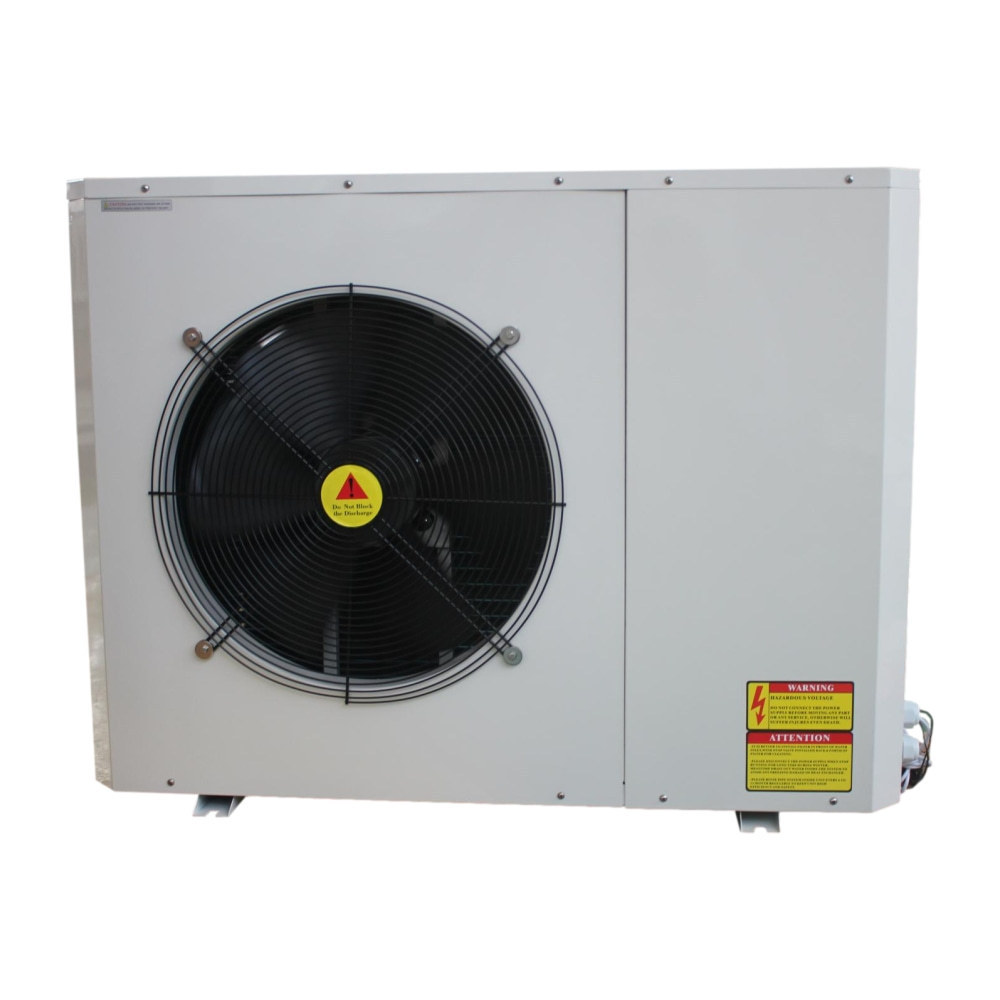
If you import, distribute or specify heat pumps, one decision now outweighs every other specification question: which refrigerant will your products use in 2027? The EU F-Gas Regulation (EU) 2024/573 starts banning R32-based monobloc heat pumps from January 2027, and the industry is pivoting to R290 (propane). This guide compares R32 and R290 from a buyer's perspective, decodes the regulation timeline, and gives you a practical checklist before you place your next order.
1. Why the refrigerant choice suddenly matters in 2026-2027
For the past decade, R32 has been the default refrigerant for residential and light commercial heat pumps. It is efficient, moderately flammable (A2L), and widely available. That comfortable status quo ends now. Under Regulation (EU) 2024/573, from 1 January 2027, self-contained and monobloc heat pumps up to 12 kW with refrigerants above 150 GWP can no longer be placed on the EU market. R32 has a GWP of 675, so it is directly in scope.
For buyers, this is not a distant compliance topic. It changes what you should stock in 2026, which models you will be able to sell in 2027, and how much your inventory is worth in two years. Understanding the difference between R32 and R290 is now a core purchasing skill, not a technical footnote.
2. R32 and R290 at a glance: GWP, flammability, efficiency
| Property | R32 (difluoromethane) | R290 (propane) |
|---|---|---|
| GWP (100-year, AR5) | 675 | 3 |
| Ozone depletion potential | 0 | 0 |
| Safety class | A2L (mildly flammable) | A3 (highly flammable) |
| Boiling point | -51.7 °C | -42.1 °C |
| Volumetric capacity | Reference (compact) | ~10% lower than R32 |
| Typical system COP | Baseline | Comparable, often slightly better at part load |
| Charge size per kW | Smaller | Larger (safety-limited) |
In practical terms, R290 delivers near-identical heating performance with a fraction of the climate impact. The trade-off is flammability: R290 is an A3 hydrocarbon, which imposes strict charge limits and design requirements that did not exist for R32 systems.
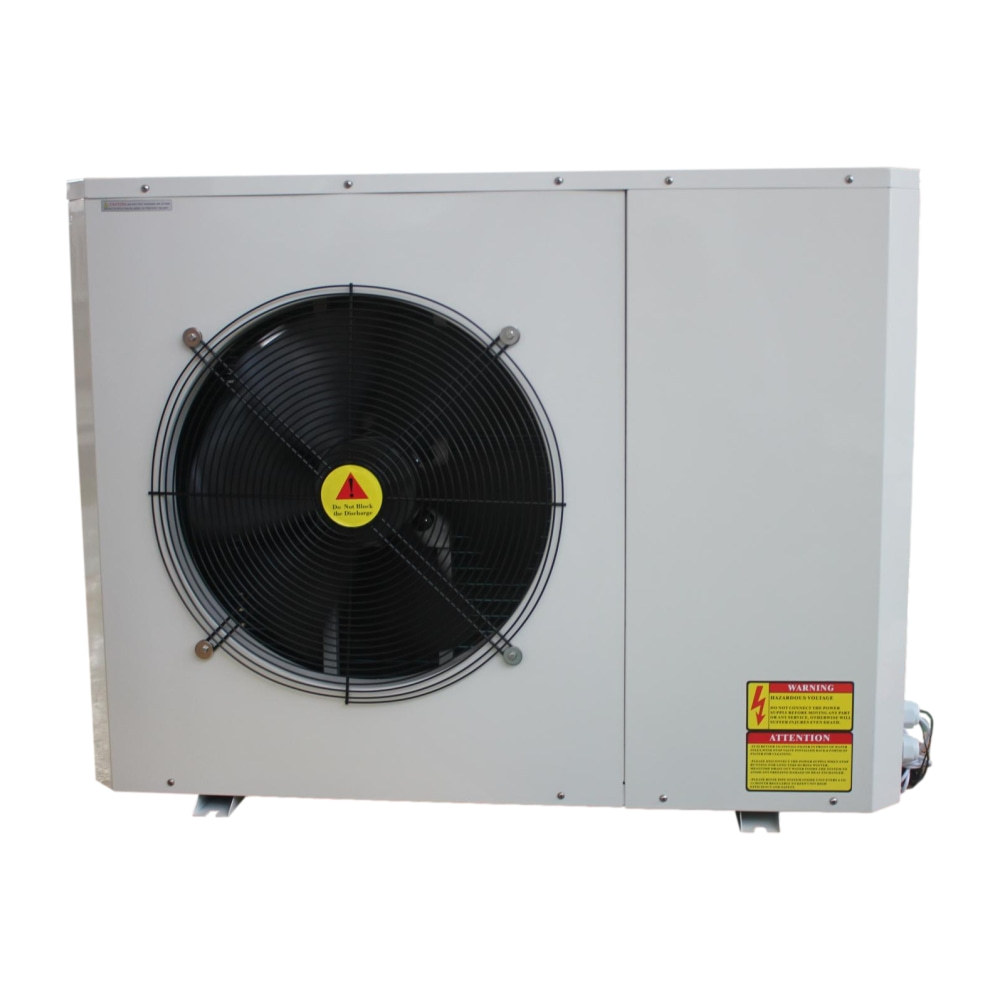
EVI monobloc heat pumps (Suoher SHAW-12EVIM shown) are among the configurations most affected by the 2027 GWP rule - and the easiest to transition because no refrigerant handling is needed on site.
3. EU F-Gas Regulation (EU 2024/573) timeline decoded
Regulation (EU) 2024/573 replaced the old F-Gas regime and, for the first time, bans specific heat pump categories outright. The key dates every importer must know:
- 1 Jan 2027 - Ban on placing on the market of self-contained and monobloc heat pumps and air-conditioning systems up to 12 kW using refrigerants with GWP ≥ 150 (excluding brine/water systems). R32 monoblocs are out.
- 1 Jan 2029 - Ban extended to hermetic (sealed split) heat pump systems up to 12 kW with GWP ≥ 150. Conventional R32 split systems are out.
- 2032 - Further restrictions for commercial and industrial categories above 12 kW.
- 2035 - Residual high-GWP categories phased out across the board.
Parallel to the bans, the HFC quota system tightens sharply: the quota cuts approved under the regulation remove roughly 75.7% to 87.7% of HFC supply against 2024 levels by 2030. Because R32 is an HFC, quota scarcity will push its price up well before the product bans bite.
Two practical consequences for buyers: first, 2026 is the last full sales year for R32 monobloc stock in the EU; second, models already on the market can continue to be sold and serviced, but only until stocks run out - and spare-part obligations will not protect you from a market that refuses R32 inventory.
4. R290 heat pumps: advantages and engineering requirements
R290 is the natural replacement for residential heating. Its GWP of 3 makes it fully compliant with every current and planned ban, and its thermodynamic properties translate into strong COP, especially in cold climates where the high discharge temperature limits of R32 systems matter less.
Charge limits and safety design
The historical constraint was the 150 g charge limit for A3 refrigerants. The updated IEC 60335-2-40 standard permits larger charges per refrigerant circuit, opening the door to 8-16 kW R290 monoblocs in normal practice. Still, safety design is not optional: flammable-refrigerant systems need leak detection, ventilation strategies, spark-free electrical components, and pressure-relief paths. Buyers should ask every supplier for the exact charge, the safety standard applied, and the test evidence - not a generic marketing sheet.
Explosion-proof production lines
Manufacturing R290 units is fundamentally different from R32 production. Filling, brazing and testing R290 requires ATEX-rated or equivalent explosion-proof equipment, nitrogen purging, and dedicated charging stations. A factory that simply rebadges its R32 line as "R290-capable" should be treated with caution. This is exactly why production capability and audit transparency matter when you source.
Efficiency at low ambient
In cold-climate tests, R290 heat pumps retain capacity well at -20 °C and below when paired with vapor injection. Expect COP in the range of 2.0-2.6 at -15 to -25 °C for well-designed EVI units, and 4.0+ at +7 °C conditions. Ask for EN 14511 / EN 14825 test reports per model, not brochure averages.
Low-ambient 12 kW EVI monobloc for heating, hot water and summer cooling. Monobloc design means no on-site refrigerant work - a natural fit for the 2027 compliance transition.
5. R454C, R744 (CO2) and the commercial segment
Above 12 kW, the options broaden. R454C (A2L, GWP ≈ 148) sits just under the 150 threshold and works as a drop-in for larger commercial units. R744 (CO2), with GWP 1, is the standard for high-temperature hot water and supermarket/industrial applications, though its transcritical cycle demands high-pressure components and specialist commissioning. For most commercial heating and hot water projects, R454C is the pragmatic choice today, while R290 continues its march upward in capacity as charge-limit standards evolve.
6. What buyers should stock and specify now
Regional strategy
- EU: Move to R290 (or GWP<150) monoblocs and splits now. Do not build 2027 stock on R32 units you cannot sell after 31 Dec 2026.
- United States: No EU-style date-based product ban yet, but EPA SNAP GWP thresholds and state-level codes (e.g., California) are pushing residential toward R32 and lower-GWP options. R290 is entering via heat pump water heaters.
- Middle East / Asia / LatAm: R32 remains viable for years; use the window to qualify R290 product lines and pricing before competitors do.
Checklist before placing orders
- Confirm the refrigerant and GWP per model - in writing.
- Request the EN 14511 / EN 14825 test report for the exact model number, including -20 °C data if you target cold climates.
- Verify R290 charge size and the safety standard applied (IEC 60335-2-40 revision).
- Ask which production line the unit is built on and whether R290 filling is ATEX-rated.
- Confirm certification coverage per model (CE, ErP, Keymark, MCS or AHRI depending on your market).
- Plan 2026 orders so that 2027 inventory is already low-GWP.
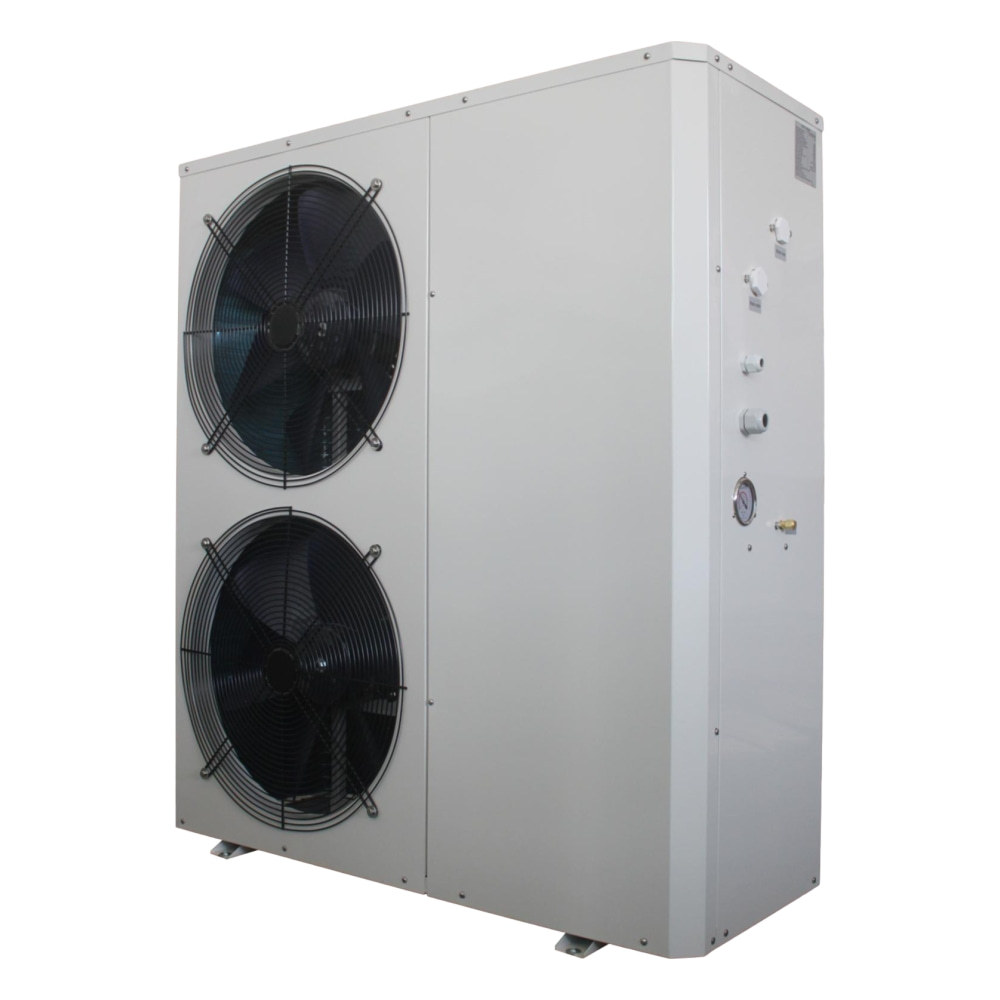
For larger homes and light commercial projects, a 16 kW EVI monobloc (Suoher SHAW-16EVIM) covers the capacity band that will see the most 2027 substitution demand.
16 kW EVI monobloc for cold-climate heating and hot water. Single-phase 220V supply simplifies installation in European residential projects.
7. How Suoher is preparing for the transition
As a Foshan-based manufacturer of DC inverter and EVI heat pumps, Suoher is consolidating its European product strategy around low-GWP monobloc configurations. The monobloc architecture is a structural advantage in this transition: the sealed, factory-charged unit removes on-site refrigerant handling entirely, which is precisely the pain point the 2027 rules create for split systems. Our EVI monobloc range is available from 11 kW to 40 kW, with single-phase options for European residential projects, and every model is factory performance-tested in our enthalpy lab before shipment. For importers planning 2026 orders, we recommend confirming refrigerant, charge size and certification documentation for each target market before production.
Get R290-Ready: Secure Your 2027 Product Lineup
2026 is a one-time window: the last full year to sell R32 monoblocs in Europe, and the best time to qualify R290 supply chains while volumes are still predictable. Buyers who move early avoid distressed inventory, secure better pricing, and build the low-GWP product story that their own customers will demand in 2027. The refrigerant choice is no longer an engineering detail - it is the central business decision of the next 24 months.
Ready to evaluate R290-ready EVI monobloc models? Suoher can share model-level test reports, R290 safety certification documentation and sample-order lead times tailored to your target markets. Browse the EVI Monobloc series or contact the Suoher export team to start your 2027 transition plan today.