COP vs SCOP: How to Read Heat Pump Efficiency Ratings Like a Pro
- Share
- publisher
- Suoher Heat Pump Team
- Issue Time
- Aug 29,2026
Summary
COP measures heat pump efficiency at one lab point; SCOP averages it across a whole heating season. This guide explains EN 14511 and EN 14825 testing, the three EU climate zones, SEER2 and HSPF2 conversions, how the ErP A+++ label works, and what to compare when sourcing heat pumps.
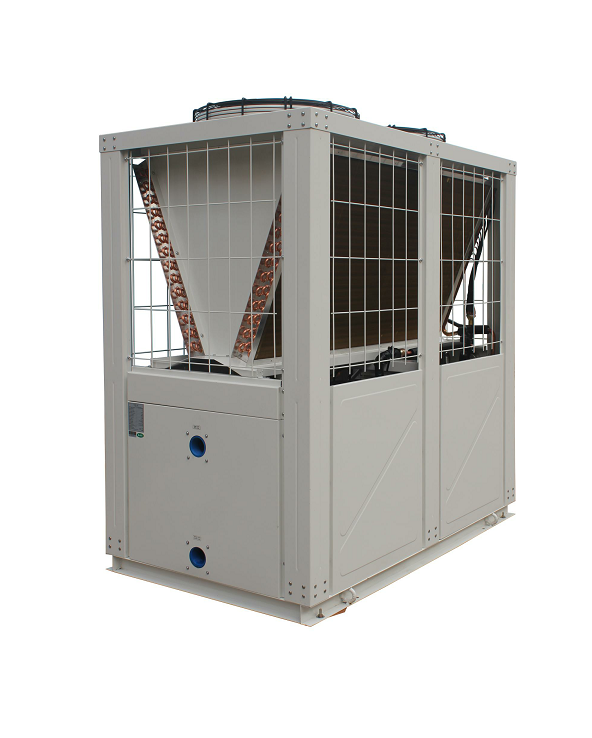
Open three heat pump datasheets side by side and you will meet four different numbers: a COP of 4.6 in one brochure, a SCOP of 3.8 in another, an A+++ ErP label on the third, and an American spec sheet listing SEER2 15.2 with HSPF2 9.0. None of them is wrong. All of them answer a different question.
That is the trap. An efficiency rating only means something once you know which conditions it was measured under, which standard defined those conditions, and which part of the heating season it represents. This guide walks through each rating the way a test engineer reads it — COP first, then SCOP, then the American and label-based systems built on top of them — so the next datasheet you open tells you what the machine actually costs to run.
Why Efficiency Numbers Confuse Buyers
A heat pump does not have one efficiency figure — it has a curve. The same unit that converts 1 kWh of electricity into 4.5 kWh of heat on a mild October afternoon may manage barely 2 kWh on a frosty night in February, when the compressor works against a bigger temperature lift and the outdoor coil periodically defrosts. Outdoor temperature, heating water temperature, and compressor load all move the result, sometimes dramatically.
Every rating on the market is therefore a snapshot of that curve taken from a different angle. COP photographs a single point. SCOP photographs the whole heating season. SEER2 and HSPF2 photograph American seasons with imperial units. The ErP label compresses the seasonal picture into a letter grade. Once you know where each camera stands, the numbers stop contradicting each other and start telling a coherent story.
The 30-Second Answer
COP is efficiency at one fixed laboratory condition. SCOP is average efficiency over an entire heating season, including part-load operation, standby and defrost. SCOP is the better number for predicting running cost; COP is the better number for engineering at a known design point. Never compare a COP against a SCOP — and never compare either across different climate zones.
COP Explained: The Simple Definition
The Coefficient of Performance is a plain ratio:
A COP of 4.0 means the machine delivers 4 kW of heat for every 1 kW of electricity it consumes. The other 3 kW are not magic — they are renewable heat moved from the outdoor air into your heating circuit, which is exactly why heat pumps undercut any resistance heater (hard-capped at COP 1.0) on running cost.
The catch sits in the words “fixed condition”. COP is measured in a laboratory under EN 14511, most often at the rating point A7/W35 — outdoor air at 7 °C, heating water delivered at 35 °C. Change either number and the COP changes with it. Because a smaller temperature lift means higher efficiency, the same heat pump scores higher feeding underfloor heating at 35 °C than feeding radiators at 55 °C. A rule of thumb our test engineers use daily: every degree lower flow temperature buys roughly 2–3% more COP.
What COP will not tell you is how the unit behaves across a real season — at part load, in defrost, in standby. That is why honest datasheets quote a range, not a single number. The Suoher SHAW-9DM1/K datasheet, for example, lists a COP envelope of 1.5–4.49 across its full operating range: 4.49 is the mild-weather best case, 1.5 is the deep-cold worst case with the compressor flat out. A brochure printing only the 4.49 is not lying — it is just not telling the whole story.
SCOP Explained: Seasonal Reality
The Seasonal Coefficient of Performance answers the question buyers actually ask: how much electricity will this machine consume over one heating season to deliver one season of heat? Formally, SCOP is total heat delivered divided by total electricity consumed — and “total” is the operative word. Seasonal calculations include part-load compressor speeds, standby losses, crankcase heater energy, defrost penalties, and any electric backup heating that switches on below the bivalent temperature.
That is why SCOP is always lower than the headline COP for the same unit — and why it is far more honest about running cost.
The Three Climate Zones
SCOP only means something together with a climate zone. EN 14825 defines three European reference climates, and the same heat pump scores differently in each:
| Climate zone | Reference city | Approx. season | What it means for SCOP |
|---|---|---|---|
| Average | Strasbourg, France | ~210 days | The default — most datasheets quote this zone |
| Warmer | Athens, Greece | ~120 days | Higher SCOP: fewer deep-cold hours |
| Colder | Helsinki, Finland | ~240 days | Lower SCOP: more hours near design temperature |
A unit advertised at SCOP 3.9 in the average zone might read 3.2 in the colder zone. If your project sits in Scandinavia, the Alps or Eastern Europe, insist on the colder-zone figure before modelling running costs.
How SCOP Is Tested (EN 14825)
EN 14825 turns the season into a weighted calculation. The unit is tested at part-load conditions across several outdoor temperature bins — for the average climate typically +7, +2, −7 and −12 °C — then the results are weighted by the number of hours the reference season spends in each bin. Thermostat-off, standby and off-mode consumption are measured and folded in. Where electric backup heaters exist, the standard requires the manufacturer to declare whether and when they engage, and that energy is counted too.
The result is a single number that behaves like a car’s fuel-economy rating: imperfect, but far closer to reality than a peak-power figure. It is also the calculation behind the EU ErP label and the EHPA KEYMARK scheme, so it is the number regulators and certification bodies lean on. Our certifications guide covers how these test reports feed into CE, KEYMARK, MCS and AHRI listings.
COP vs SCOP: Key Differences at a Glance
| Criterion | COP | SCOP |
|---|---|---|
| What it measures | Efficiency at one fixed lab condition | Average efficiency over a full heating season |
| Governing standard | EN 14511 | EN 14825 |
| Test points | One rating point (e.g. A7/W35) | Multiple part-load bins plus standby, defrost and off modes |
| Includes part load and standby | No | Yes |
| Depends on climate zone | No | Yes — average / warmer / colder |
| Best used for | Engineering and peak-load design | Running-cost comparison and ErP labelling |
The practical difference is money. Take a home needing 10,000 kWh of heat per season with electricity at €0.30/kWh:
| Metric | Unit A (SCOP 3.5) | Unit B (SCOP 4.5) |
|---|---|---|
| Seasonal electricity consumption | 2,857 kWh | 2,222 kWh |
| Annual electricity cost | €857 | €667 |
| Annual saving | — | €190 |
| 10-year saving | — | €1,900 |
One point of SCOP, on one house, is a four-figure decision over a product cycle. That is why professional buyers compare SCOP at equal climate zone and flow temperature, and treat COP as supporting evidence.
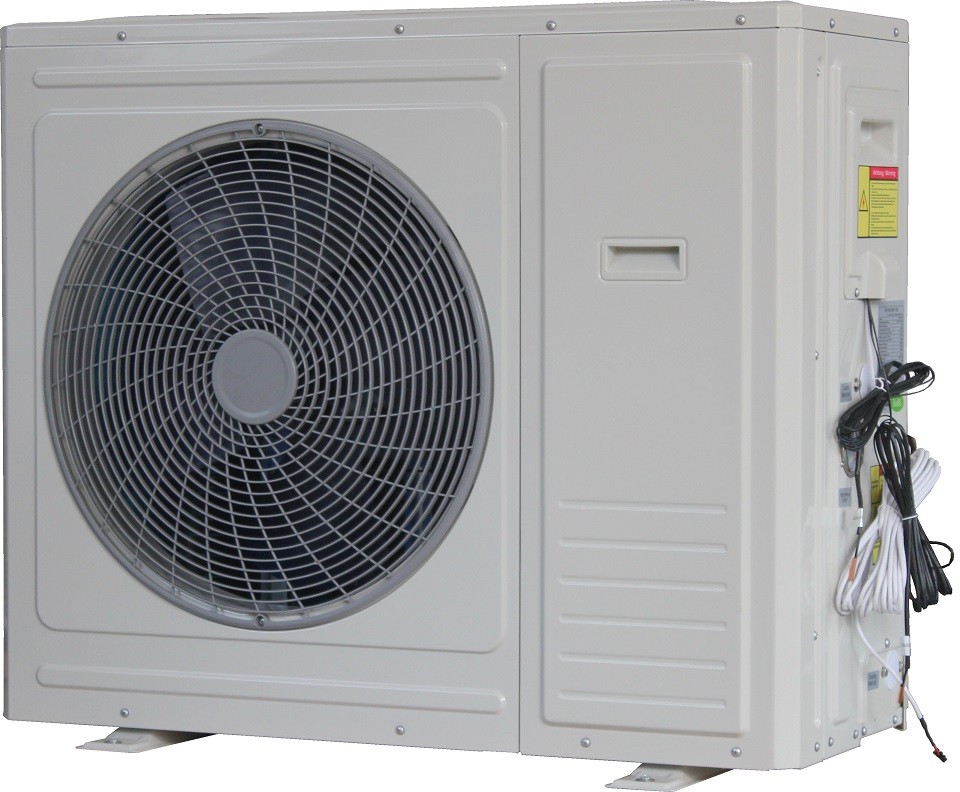
Suoher SHAW-9DM1/K — Economical DC Inverter Heat Pump
- Heating capacity: 5.1–8.9 kW
- COP: up to 4.49 (full envelope 1.5–4.49)
- Power supply: 220 V / 1 phase
- Max water temperature: 60 °C
GMCC inverter compressor, competitive pricing and quiet modulation make this the entry workhorse for mild-climate residential projects — the same unit whose COP envelope we referenced above.
View ProductNorth American Ratings: SEER2 and HSPF2
The United States and Canada run a parallel system defined by the DOE test procedure and certified through AHRI. SEER2 (Seasonal Energy Efficiency Ratio) covers cooling; HSPF2 (Heating Seasonal Performance Factor) covers heating. Both express output in Btu per watt-hour of electricity — the same seasonal-averaging idea as SCOP, wearing imperial units.
Since January 2023, the M1 test procedure reset the bar: new split-system heat pumps sold in the US must meet at least SEER2 14.3 and HSPF2 8.8 nationwide, with stricter regional minimums for air conditioners in the hot south-east and south-west. Certified figures live in the AHRI directory — the place to verify a quoted number rather than trusting the brochure.
Converting to familiar territory is one division: seasonal COP ≈ HSPF2 ÷ 3.412, because 1 W equals 3.412 Btu/h. An HSPF2 of 9.0 therefore equals a heating seasonal COP of about 2.64, and a SEER2 of 14.3 equals a cooling seasonal COP of about 4.19. That gap is not American machines being worse — the US test weights different climate bins and hotter conditions. The rule stands: translate before comparing, and never put a European SCOP and an American HSPF2 in the same sentence without a conversion.
Reading the EU ErP Energy Label (A+++ and Friends)
In Europe, the seasonal numbers roll up into the ErP energy label you see on retail listings. Under the energy labelling framework (Regulation (EU) 2017/1369) and the space-heater label (Regulation (EU) 811/2013), water-based heat pumps are graded from A+++ down to G on their seasonal space heating efficiency ηs, expressed as a percentage:
| Energy class | ηs threshold (water-based space heaters) |
|---|---|
| A+++ | ≥ 150% |
| A++ | 125–149% |
| A+ | 98–124% |
| A | 90–97% |
| B | 82–89% |
| C | 75–81% |
| D | 30–74% |
| G | < 30% |
ηs is derived from the SCOP calculation above, adjusted through primary-energy conversion and a set of correction factors, so the mapping from SCOP to letter class is not one universal line — it depends on product type and application. Three practical reading rules: compare labels only within the same product category; check the declared climate zone on the fiche; and remember that a low-temperature unit feeding underfloor heating at 35 °C is graded on an easier curve than a 55 °C radiator unit — which is the label doing exactly what it should.
Practical Tips: What to Compare When Sourcing
Compare Within the Same Climate Zone and Flow Temperature
Before comparing any two numbers, align the context. Check which climate zone the SCOP was declared in (average vs colder), which application temperature it assumes (35 °C low-temperature vs 55 °C high-temperature), and whether the COP rating point is A7/W35 or something else. A colder-zone SCOP of 3.2 can represent a stronger machine than an average-zone SCOP of 3.9 — the zone, not the number, is the story.
Ask for EN 14511 Test Reports
A datasheet number is a claim; a test report is evidence. Ask any supplier — including us — for the full EN 14511 capacity and COP tables, not just the marketing point. Your checklist:
- Full capacity and COP tables at multiple outdoor temperatures (A7, A2, A−7, A−12), not a single best-case point
- Declared rating conditions: air temperature, water temperature, and whether figures are gross or net of fan and pump power
- EN 14825 seasonal calculation per climate zone, with standby and defrost energy included
- A third-party laboratory or certification body behind the report — see our certifications guide for KEYMARK, MCS and AHRI
- Bivalent temperature, and how any electric backup heating is counted in the seasonal figure
Suppliers who test every production batch can answer these in a day. Suoher’s Foshan factory test lab runs each DC inverter unit through EN 14511 points before crating, so the datasheet envelope you read is the envelope we actually measured.
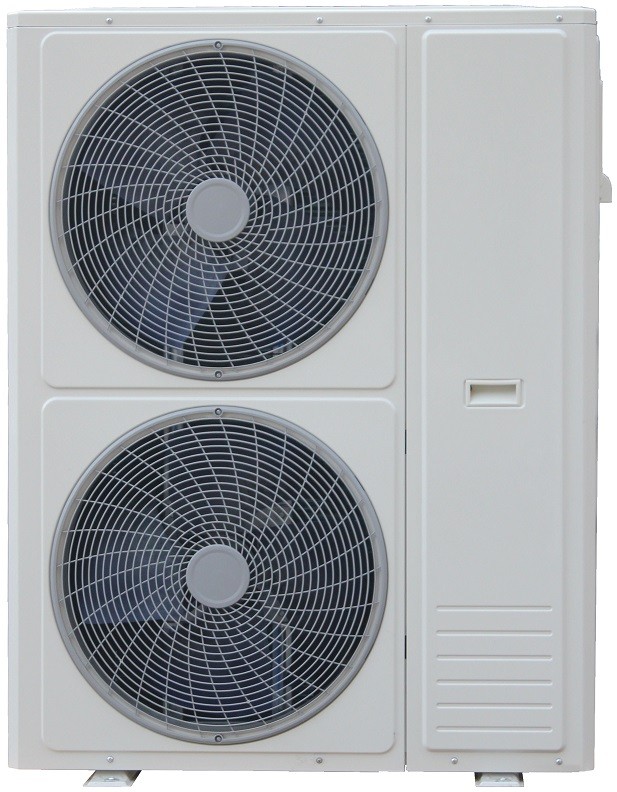
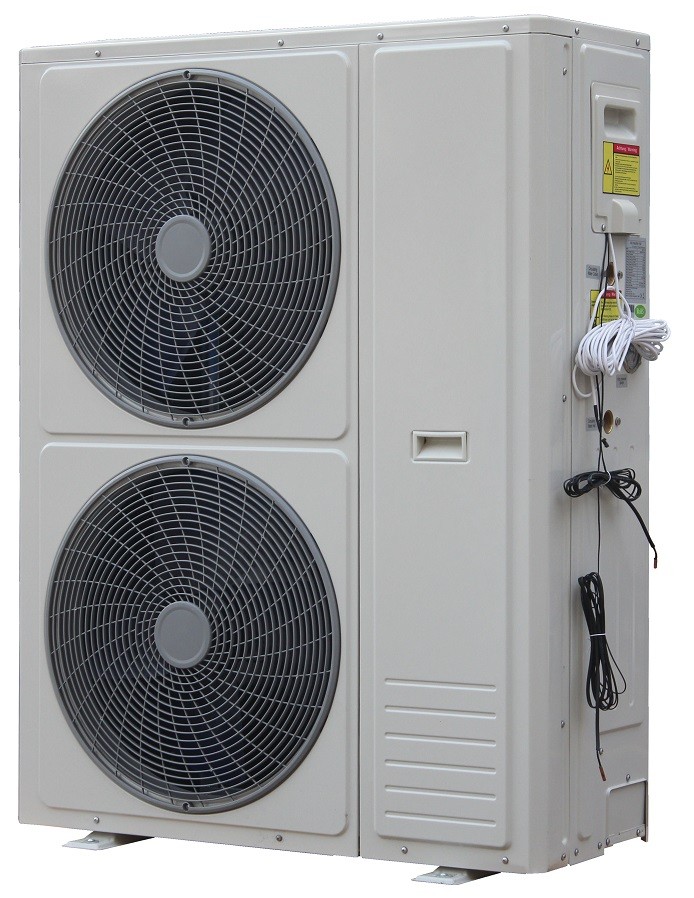
Suoher SHAW-15DM3/K — 15 kW DC Inverter Heat Pump
- Heating capacity: 8.9–15.2 kW
- COP: up to 4.43
- Power supply: 380 V / 3 phase
- Noise: 58 dB(A)
The 15 kW class pairs a wide modulation range with quiet 58 dB(A) operation and smart controls — sized for larger homes and light commercial hydronic systems, with OEM/ODM options for distributors.
View ProductRead Efficiency Data Like a Pro: Request the Full COP & SCOP Test Pack
Every Suoher DC inverter heat pump ships with its EN 14511 capacity tables and EN 14825 seasonal calculations for average, warmer and colder zones — the same data our OEM customers use to build their own energy labels. If you are comparing suppliers, do not settle for a single headline number: request the full efficiency curve for your market’s climate zone and flow temperature, and model the running cost before committing.
Send us your target market, typical flow temperature and annual heat demand, and Suoher’s engineering team will return a side-by-side SCOP comparison with an estimated annual electricity cost for your project. Request the efficiency test pack here, or browse the complete DC inverter line-up to review rated performance envelopes.