Heat Pumps and Building Decarbonization: Policy Trends Reshaping Heating in 2026
- Share
- publisher
- Suoher Heat Pump Team
- Issue Time
- Sep 14,2026
Summary
Building policy has made heat pumps core climate infrastructure. This article maps the 2026 heating policy toolbox - fossil boiler bans, the recast EU EPBD, carbon pricing via ETS2 and grid flexibility programs - and explains what building decarbonization means for heat pump demand: units as grid assets, thermal storage, district-scale plants, the installer bottleneck, and five concrete sourcing implications for importers and OEM buyers planning 2027 lineups.
For twenty years, decarbonization conversations centered on power plants and cars. In 2026, buildings have moved to the center of the table - and the technology every major policy framework now relies on to decarbonize heat is the heat pump. This article maps the policy toolbox reshaping heating markets this year, from fossil fuel boiler bans to the EU EPBD, carbon pricing and grid flexibility programs, and translates what those signals mean for importers, distributors and project developers building their 2027 product lineups.
Buildings: the forgotten emissions sector
According to IEA analysis, operating buildings account for roughly 26% of global energy-related CO2 emissions - and that share rises towards 37% once construction materials are included. Within buildings, space heating and hot water are the largest single end uses, and in most of Europe, North America and North Asia they are still served by burning fossil fuels on site: natural gas boilers, oil boilers and, in some regions, direct electric resistance heating.
What changed in the mid-2020s is that electricity decarbonized faster than heat did. As grids add wind, solar and storage, every kilowatt-hour shifted from a gas boiler to a heat pump automatically cuts emissions - a heat pump delivering 3-4 units of heat per unit of electricity cuts heating emissions by 50-80% today, and more every year as grids clean up. Policy makers understood this asymmetry: building electrification is now treated as core climate infrastructure, not a consumer choice. The IEA Net Zero pathway expects heat pumps to meet around 20% of global heating needs by 2030, which implies heat pumps reaching roughly 40% of heating equipment sales within this decade - a sales-share target that no major market is currently on track to hit without sharper policy.
That gap between ambition and current sales is exactly why 2026 has become the year of the heating policy toolbox.
Policy toolbox for heating electrification
Four instruments dominate the 2026 policy landscape. They rarely appear alone; most markets now combine two or more.
Equipment bans (e.g., new gas boilers)
The bluntest instrument is the fossil fuel heating ban. Norway banned the use of oil and paraffin heating from 2020. The Netherlands has stopped connecting new homes to the gas grid and is pushing neighbourhood-level heat pump conversion. Vienna prohibits new gas connections in newly constructed buildings. Germany's Building Energy Act requires new heating systems installed in new builds to draw 65% of their heat from renewable sources - in practice, heat pumps or district heating. The UK's Future Homes Standard, taking effect for new homes from 2025, is designed to make low-carbon heating the default, ending routine gas boiler installation in new construction. Denmark is phasing out oil boilers in existing buildings through a combination of conversion subsidies and local bans.
The direction of travel matters more than any single date: every major European market has now put a boiler phase-out on the legislative calendar, typically between 2028 and 2040. Product lines built exclusively around condensing gas technology face a shrinking addressable market in Europe each year.
Building codes (EU EPBD)
The recast Energy Performance of Buildings Directive (EPBD, Directive (EU) 2024/1275) is the EU's central instrument. Key provisions relevant to heat pump demand:
- All new public buildings must be zero-emission from 2028, and all new buildings from 2030 - which effectively rules out on-site fossil combustion.
- Member States must establish trajectories so that fossil fuel boilers stop receiving financial incentives from 2025 and are phased out by 2040 at the latest.
- National Building Renovation Plans must target the worst-performing stock, where heat pump retrofits deliver the largest CO2 cuts.
Because the EPBD binds member states through national law, its effects arrive as local permitting rules, subsidy eligibility criteria and installer requirements - which is why heat pump importers are suddenly being asked for ErP/Keymark documentation and SCOP data at a level of detail that was rare three years ago.
Carbon pricing
The EU's ETS2 emissions trading system, starting in 2027, puts a carbon price on fuels used for building heating for the first time. Gas and oil for heating will carry a visible carbon cost that utilities pass through to bills. Analysts expect ETS2 to flip the running-cost comparison decisively towards heat pumps in most member states, and several governments are pre-designing "carbon bonus" mechanisms that rebate ETS2 revenue back to households that switch to heat pumps. National carbon taxes in markets like Sweden and Denmark have already made fossil heating the expensive option; ETS2 extends that logic across the whole EU.
Grid-friendly demand response
The newest instrument is not a restriction but an invitation: flexibility markets. Regulators are designing tariffs that reward heat pumps for consuming power when the grid is clean and cheap - and several national schemes now explicitly reference heat pump demand response in grid codes. For equipment makers, this raises the bar on controls: units need SG-Ready-type interfaces, smart grid readiness and remote management to qualify.
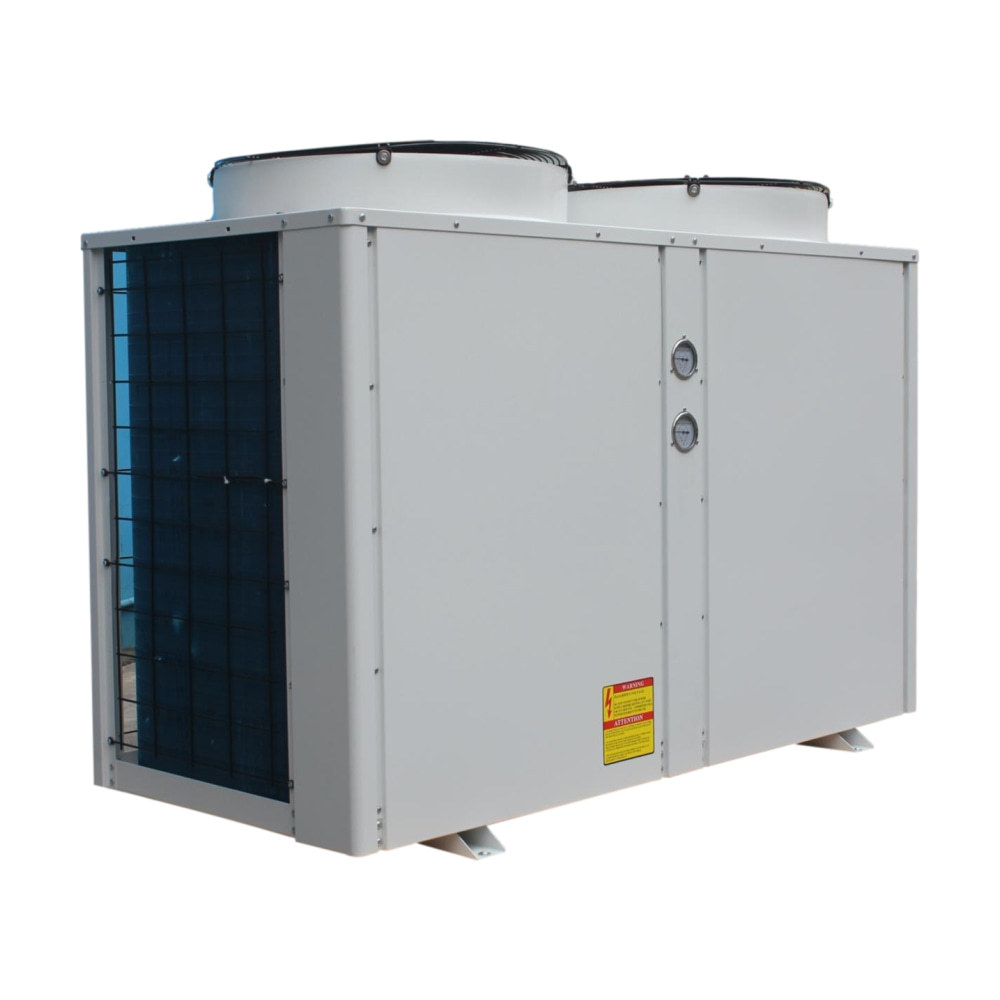
High-capacity EVI monoblocs such as the Suoher SHAW-34EVIM are increasingly specified as the default heating plant for code-driven building electrification projects, replacing gas plant rooms entirely.
Heat pumps as grid assets
One of the most interesting findings in recent IEA heat pump market analysis is that heat pumps are already a measurable factor in electricity system planning: across major markets they represent roughly 2-16% of peak electricity demand, and that share will grow with every boiler replaced. Seen from the grid operator's chair, a fleet of heat pumps is either a threat (unmanaged morning heating peaks in a cold snap) or an asset (millions of controllable thermal loads that can shift in time).
Thermal storage and TOU tariffs
The enabling hardware is unglamorous: buffer tanks and domestic hot water storage. A 200-500 litre buffer lets a heat pump run hard during cheap, windy hours and coast through the evening peak. Time-of-use tariffs, dynamic pricing and capacity-market participation turn that stored heat into revenue. In markets like the UK (Agile-style dynamic tariffs), the Nordics and the Netherlands, homes with heat pumps plus storage routinely shift 30-50% of heating energy out of peak windows. For commercial buildings, the arithmetic is stronger still: load-shifting a bank of commercial heat pumps against a demand-charge tariff can pay back the buffer tank in under three years.
Suoher's inverter product line has followed this trend deliberately: DC inverter compressors, RS485/WiFi control interfaces and SG-Ready-style inputs are now standard conversation points with our distribution partners, because a heat pump that cannot talk to a tariff or an energy management system is increasingly disqualified from grid-support programs.
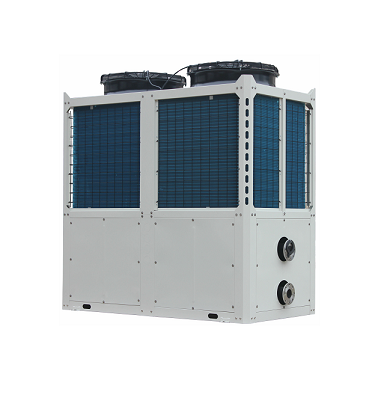
Vertical commercial unit built for large-building electrification and modular cascade plants. Built-in WiFi and an RS485 interface make it ready for BMS integration and grid-responsive control schemes.
District heating and large heat pumps
Building-level units get the headlines, but the fastest-moving segment of 2026 policy support is district heating decarbonization. Utilities across Denmark, Sweden, Germany and the Netherlands are replacing gas peaking plants with large-scale heat pumps from 1 MW to 50 MW+, extracting heat from sources that were previously ignored: treated sewage water, rivers, seawater, industrial waste heat and even data centre cooling circuits. These plants can reach effective COPs of 3-5 at district flow temperatures, and they anchor the business case for expanding heat networks that then serve buildings that could never host an individual heat pump.
Between the megawatt-scale utility plant and the single-family home sits a large, underserved middle: apartment blocks, schools, hotels and light industrial sites that need 100 kW to 1 MW of heating capacity. This is exactly the segment our commercial range targets - modular 90kW-class air-to-water units that can be cascaded in banks, plus high-temperature and EVI variants for older buildings with radiators sized for boiler flow temperatures. For ground-coupled projects, Suoher's ground source heat pump line (SHWW series, up to 48 kW per unit) offers another compliance path where air-source noise or space constraints are limiting factors.
Modular commercial units such as the Suoher SHAW-90CV allow plants to grow with phasing budgets - a common requirement in publicly funded renovation programs under the EPBD.
The installer bottleneck and quality agenda
Policy can mandate heat pumps; only people can install them. Industry bodies estimate Europe needs on the order of a million additional heating installers by 2030 to meet electrification targets, and current training pipelines cover only a fraction of that gap. The constraint is real for importers too: a distributor with great product and no certified installer network will lose tenders to competitors who can guarantee commissioning quality.
This is why the EPBD and national programs increasingly bundle quality requirements with money: certified installer lists, one-stop-shop renovation services, mandatory commissioning documentation and monitored SCOP guarantees. Field experience is blunt about why: our own factory service data shows that a large share of underperformance complaints trace back to installation issues - undersized units, poor hydraulic design, missing buffer volume - rather than to the equipment itself. That is why Suoher ships every export order with commissioning checklists, hydraulic design guidance and remote technical support, and why we treat installer training for partners as part of the product rather than an afterthought.
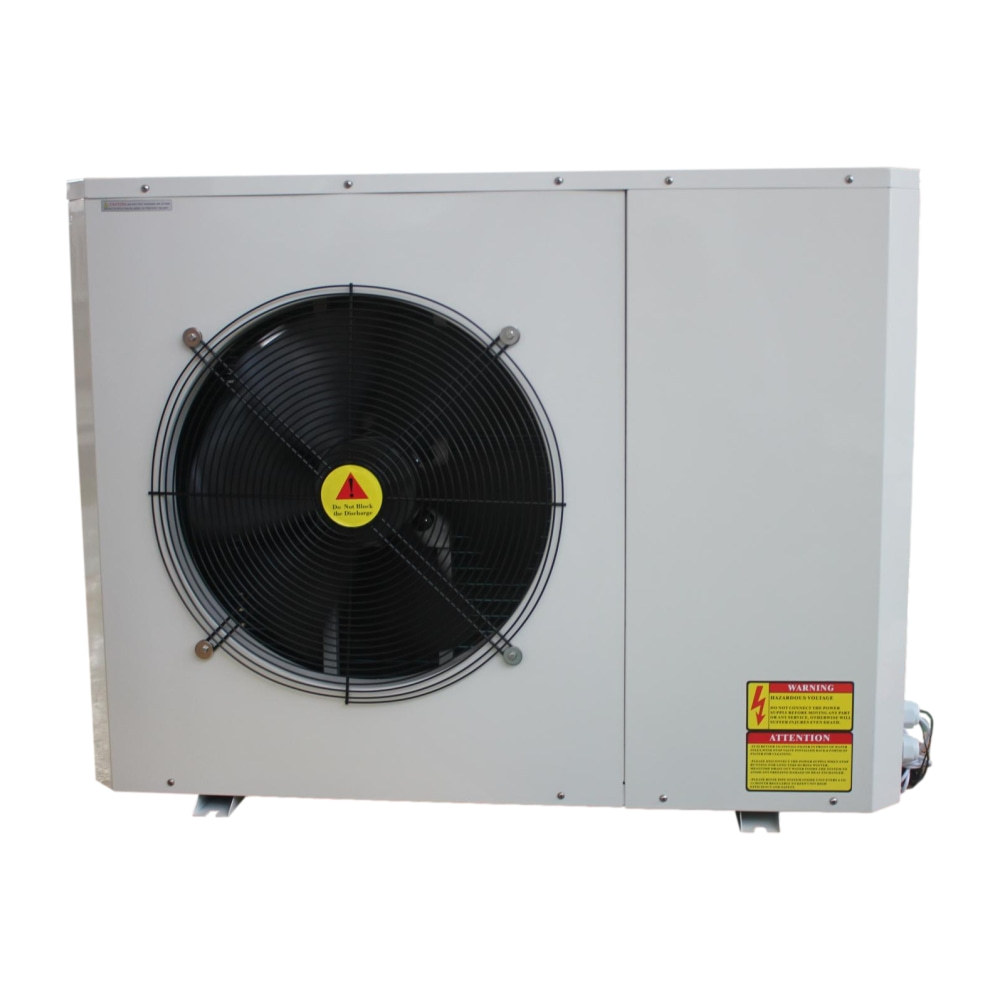
Monobloc design keeps refrigerant work on the factory floor - a small detail with a large effect on the installer bottleneck, since site crews only handle water connections and electrics.
Implications for heat pump businesses
For importers, distributors and OEM buyers watching the 2026 policy map, the practical conclusions are concrete:
- Build for compliance, not just performance. EPBD-linked procurement now demands EN 14511/EN 14825 test data, ErP labels, Keymark or equivalent certification, and refrigerant roadmaps (R32 today, R290-ready tomorrow). Ask for the documentation before the tender asks you.
- Position across the capacity ladder. Policy drives demand at both ends - residential retrofits (5-16 kW) and building-scale plants (50-500 kW). A catalogue with both, plus ground source options, captures renovation programs at every scale.
- Treat controls as a spec line, not a feature. SG-Ready inputs, RS485/BMS integration, WiFi monitoring and demand-response readiness are becoming tender prerequisites in grid-flexible markets.
- Support the installer, win the project. Commissioning documentation, spare-part availability and remote diagnostics increasingly decide public tenders where long-term SCOP guarantees are written into contracts.
- Time your market entry to the ban calendar. Markets with boiler phase-out dates in 2028-2030 will see demand step-changes; inventory and certification should be in place 12-18 months before the date, not after.
The deeper point is that policy risk has become product strategy. A sourcing decision made today will ship into markets where fossil boilers are banned, carbon-priced and grid-constrained - and equipment that fits that world commands both regulatory preference and better margins.
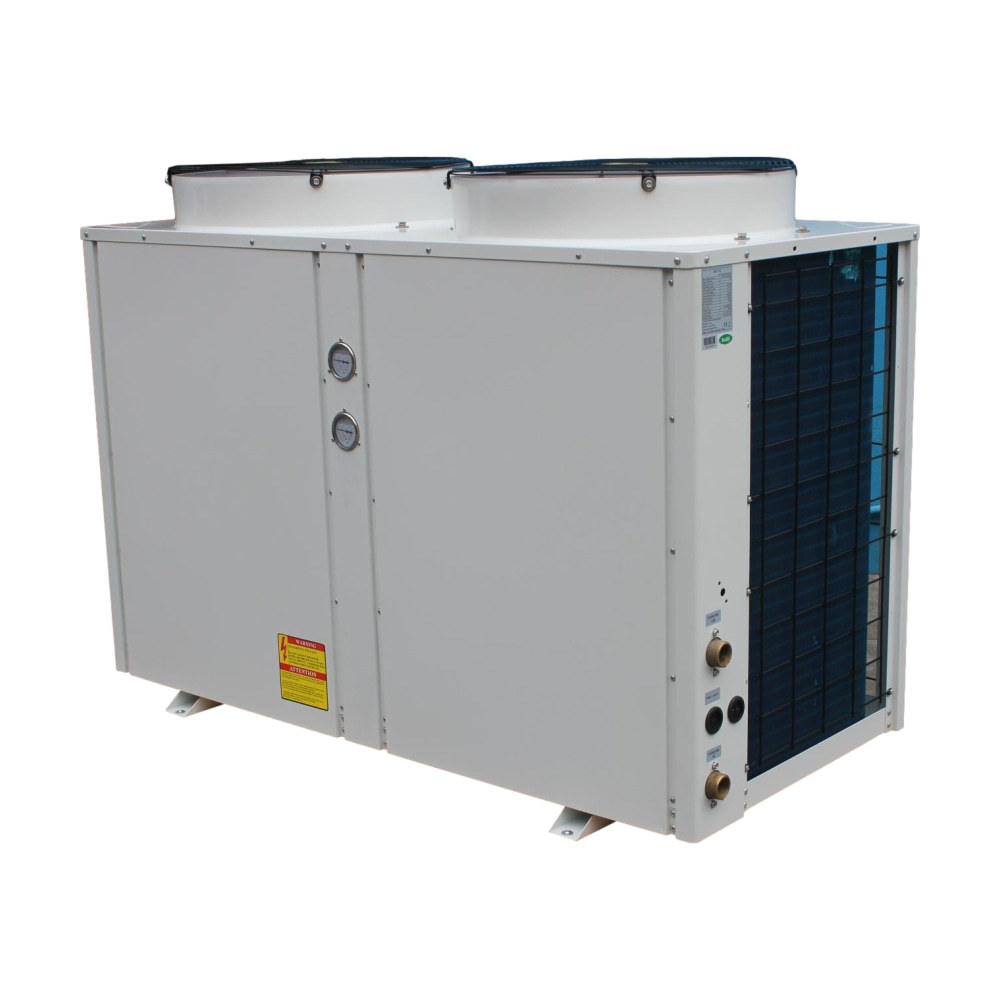
Low-ambient EVI monobloc for building electrification in cold regions - heating, hot water and summer cooling in one unit, with 12,000 m³/h airflow for stable capacity at design conditions.
Turn 2026 Policy Signals Into Your 2027 Sourcing Plan
The policy map is no longer speculative: boiler bans have dates, the EPBD has force of law, ETS2 starts pricing carbon into heating fuels in 2027, and grid programs are live today. The importers who benefit will be the ones who align their lineups now - certification paperwork, capacity ladder, controls readiness and installer support - before their local market's step-change arrives.
Suoher's export engineering team works with distributors and project developers to map policy requirements onto concrete model selections - from residential EVI monoblocs to modular 90kW commercial cascades and ground source systems. Read our market outlook for the demand data behind these trends, browse the commercial heat pump range, or contact Suoher for a policy-aligned product recommendation and OEM quotation for your market.